
Hide Playroom Clutter with Chic & Sustainable Storage
Storage solutions that look good, work hard, and don't compromise on materials
At some point in every parent's life, there's a moment of reckoning. You look around your living room and realize it has quietly, completely, and permanently become a playroom. There are blocks under the couch, a soft pretzel tucked behind a cushion, and something that might be a Lego on the rug you once loved. The family room is no longer for the family. The kids have claimed it, the toys have won.
Here's the thing: they don't have to. With the right storage, you can have a living space that you can actually invite your friends into as well. One that functions for kids and adults, with all the toys hidden in plain sight inside furniture that looks intentional and grown-up. The pieces we've rounded up below do exactly that. And because this is WBC, we've also curated with sustainability & safety in mind - prioritizing solid wood, responsible sourcing certifications, and brands that are transparent about their materials.
What We Look for in Sustainable Family Furniture
Furniture is one of those categories where the safety and sustainability considerations aren't always obvious. Here's a quick rundown of what we think about when choosing pieces for a family home.
The formaldehyde problem with engineered wood
Most affordable furniture is made from particleboard, MDF (medium-density fiberboard), or plywood. These are engineered woods that use formaldehyde-based resins as binding agents. According to the International Agency for Research on Cancer (IARC), formaldehyde is a known human carcinogen. These materials off-gas into your home through a process called VOC (volatile organic compound) emission, with new furniture releasing the most in the first weeks and months after purchase.
Solid wood is naturally formaldehyde-free, making it the cleanest material choice. When engineered wood is unavoidable, look for GREENGUARD Gold certification, which verifies that a finished product's chemical emissions stay within strict limits. It's one of the most meaningful certifications for indoor air quality.
“With the right storage, you can have a living space that actually functions for adults too, with all the toys hidden in plain sight inside furniture that looks intentional and grown-up.”
What the certifications actually mean
FSC Certified (Forest Stewardship Council): Wood sourced from responsibly managed forests with verified environmental and social standards. Not a toxicity certification, but a meaningful sustainability signal — brands that care about FSC tend to care about material quality across the board.
GREENGUARD Gold: Screens for 360+ VOCs and sets strict limits on formaldehyde and other chemical emissions. Originally called GREENGUARD Children & Schools, it's the certification you want in a space where kids spend time.
OEKO-TEX Standard 100: For textiles and soft goods, tests for 350+ harmful substances including lead, phthalates, formaldehyde, and azo dyes.
Solid wood vs. MDF/particleboard: Solid wood is naturally formaldehyde-free and more durable. MDF and particleboard contain chemical binders and are harder to assess without third-party certification.
Finishes and paints matter too
Even solid wood furniture can off-gas from its finish or paint. Look for water-based or natural oil finishes (like hardwax oil or linseed oil) rather than solvent-based polyurethane. Low-VOC and zero-VOC paints are also significantly better for indoor air quality than conventional solvent-based alternatives.
WBC Note: All products in this roundup were curated with sustainability features in mind. We've noted the standout certifications and materials for each. Check individual listings for full specification details.
THE PICKS
Sustainable Toy Storage Solutions We Love

A sideboard made from reclaimed oak is one of the strongest sustainability stories in this roundup. Reclaimed wood repurposes material that already exists rather than sourcing new timber, making it one of the most environmentally responsible choices in furniture. The weathered oak finish gives it a warm, lived-in character that works beautifully in family spaces. Generous interior storage hides a surprising amount of toy chaos behind doors that look completely intentional.
Sustainability standout: Reclaimed oak - no new trees required, giving a second life to existing wood
Best for: Living rooms and open-plan family spaces where you want storage to read as furniture
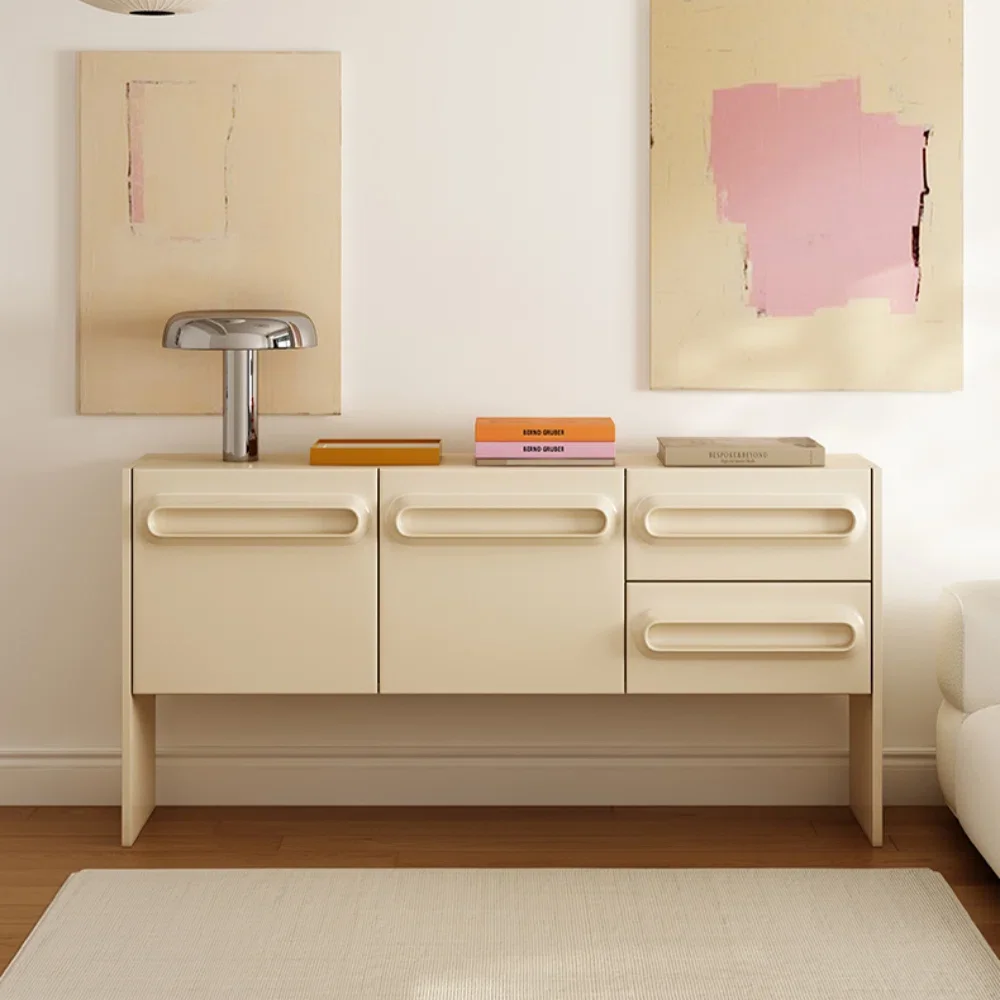
A clean-lined sideboard that reads more like a design piece than a toy box. The simple, unfussy silhouette works with most living room aesthetics and the closed-door storage keeps whatever's inside completely out of sight. A practical, accessible price point for a piece that earns its square footage.
Best for: Parents who want maximum storage at an accessible price without sacrificing the look of a grown-up living room
Tip: Check the listing for material specification - look for solid wood components or confirm CARB2 compliance for any engineered wood panels
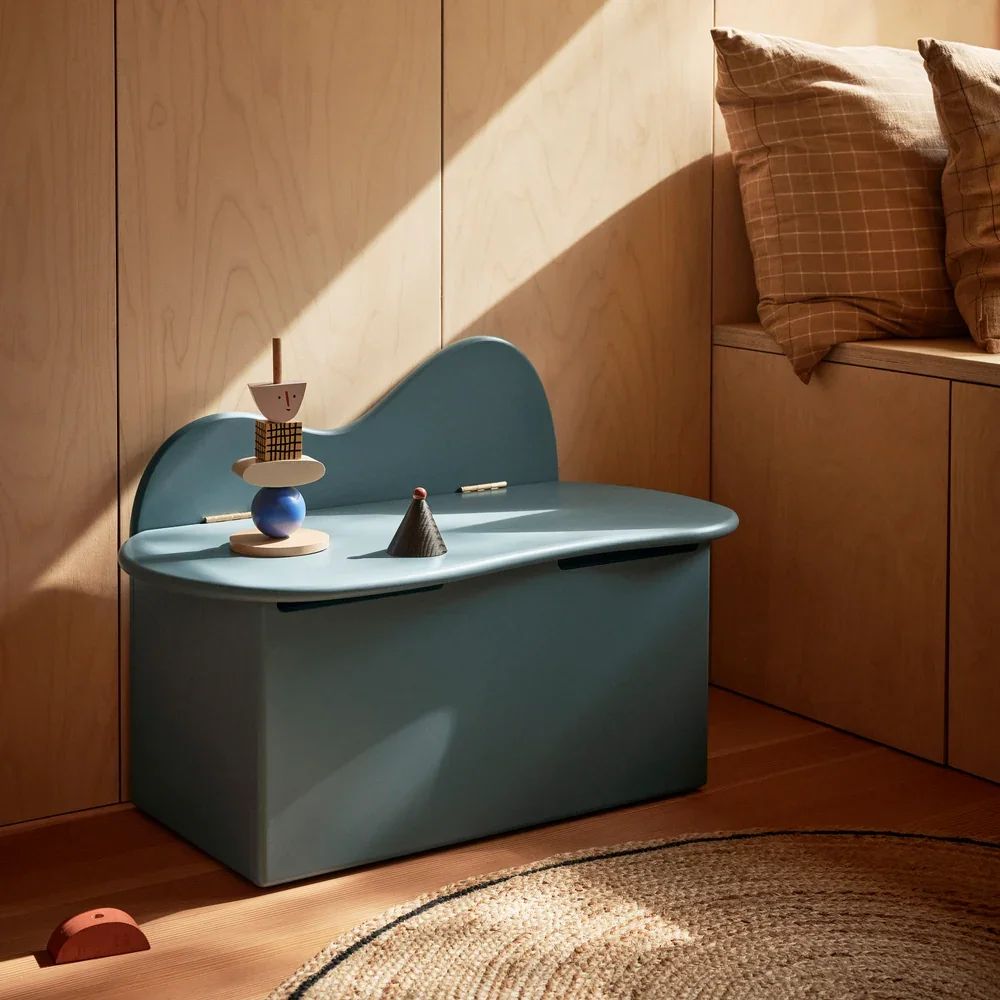
A storage bench with a design-forward profile that works equally well in an entryway, living room, or kids' space. The interior storage is ideal for oversized toys, stuffed animals, and anything else that doesn't fit neatly in a box. 2Modern carries pieces from design-conscious brands with strong sustainability credentials - worth checking the specific brand and material specs on this one.
Best for: Entryways, living room seating, or anywhere you need a surface plus hidden storage
Sustainability: FSC-certified wood
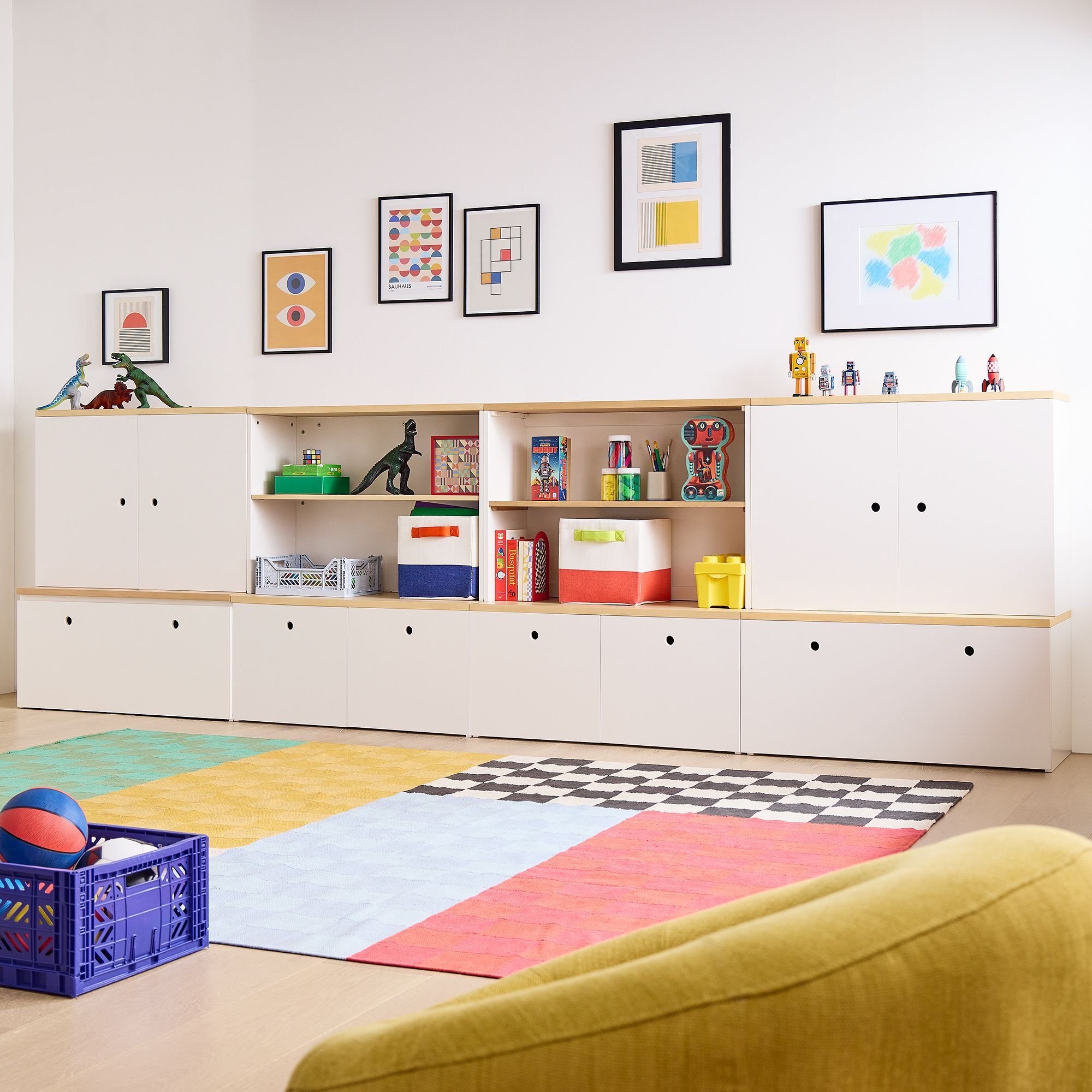
If you're going to invest in one storage piece, this is it. The Ziggy set is a full wall storage system — a combination of low cabinets with doors, open shelving, and drawers that together create a built-in look without the built-in price tag or permanence. The white and natural wood finish is clean enough to live in a living room without looking like a playroom, and the low profile means the top surface doubles as a display shelf.
West Elm is a certified B-Corp and has made public commitments to responsible sourcing and Fair Trade manufacturing across their line. Worth checking the specific material spec on the Ziggy (engineered wood with a birch veneer edge, based on the product imagery) and confirming GREENGUARD certification status directly on the listing before purchasing.
Sustainability standout: West Elm is B-Corp certified with Fair Trade manufacturing commitments across their product line
Best for: Families who want a wall-length, built-in look with maximum hidden storage capacity — this is the statement piece that anchors a whole room
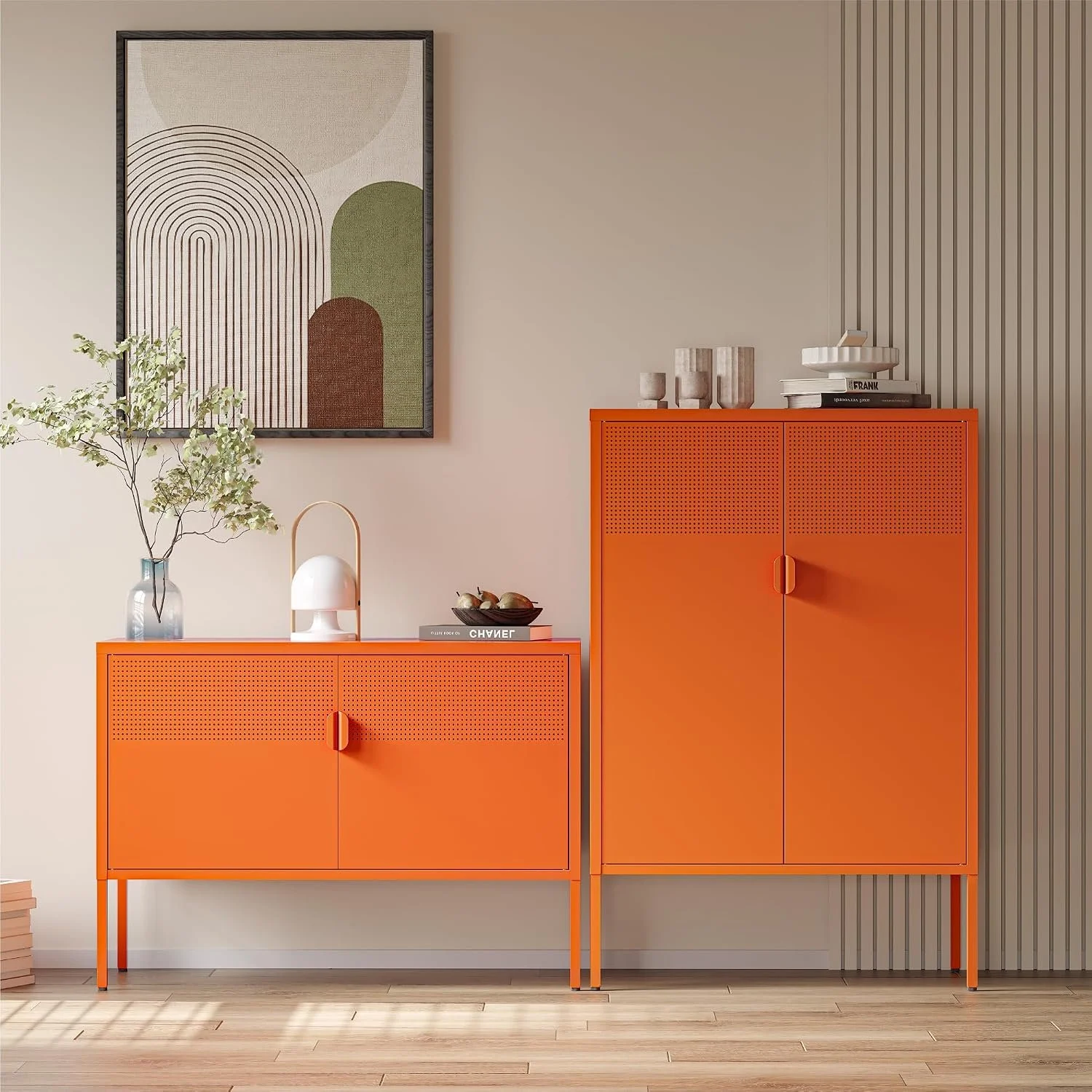
Metal is an underrated option in sustainable furniture - it's inherently durable, doesn't off-gas the way engineered wood can, and is recyclable at end of life. This sideboard in a warm terracotta brings a pop of color that works surprisingly well in family spaces while keeping everything inside hidden. The adjustable shelving makes it adaptable as toy types change over the years.
Sustainability standout: Metal construction - no formaldehyde off-gassing, highly durable, recyclable at end of life
Best for: Parents who want a bold, pop of color with a statement piece that hides a lot and lasts even longer
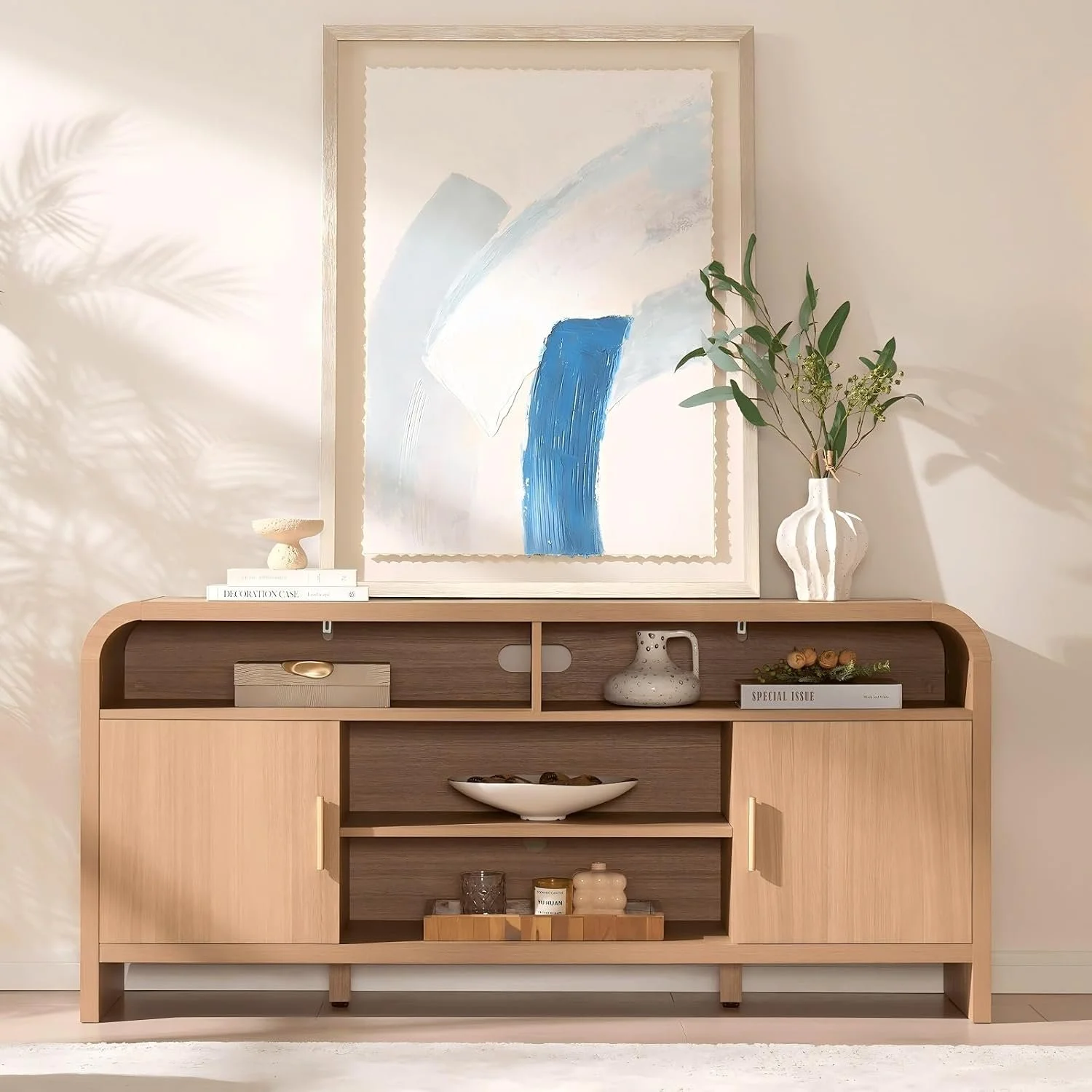
FSC certification on a piece at this price point is genuinely notable. It means the wood was sourced from responsibly managed forests with verified environmental and social standards - a meaningful differentiator from most mass-market entertainment furniture. The curved design has a softer, more sculptural quality than standard media consoles and works well in spaces that lean contemporary or organic modern.
Sustainability standout: FSC-Certified wood - responsibly sourced, verified by the Forest Stewardship Council
Best for: Living rooms with a TV setup where you want storage to integrate with your media unit rather than compete with it
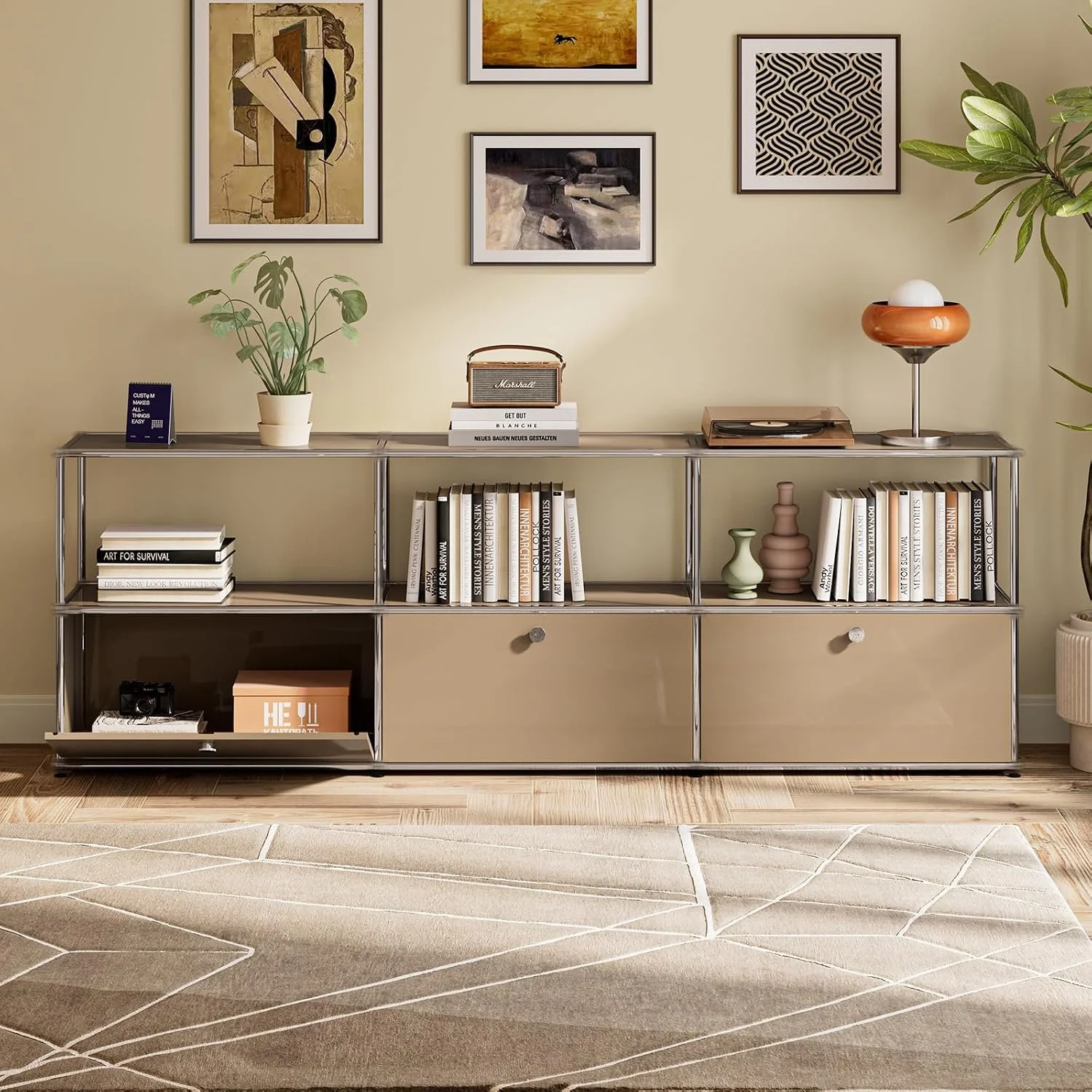
The modular format here is what makes this piece stand out for families: you can configure it to fit your specific space and reconfigure it as your needs change, which is a genuinely sustainable approach to furniture. Metal construction means no formaldehyde concerns and exceptional durability. The mid-century silhouette keeps it feeling elevated rather than utilitarian.
Sustainability standout: Modular and metal - adaptable over time, durable, no off-gassing, recyclable
Best for: Families who move or redecorate and want furniture that adapts rather than being replaced
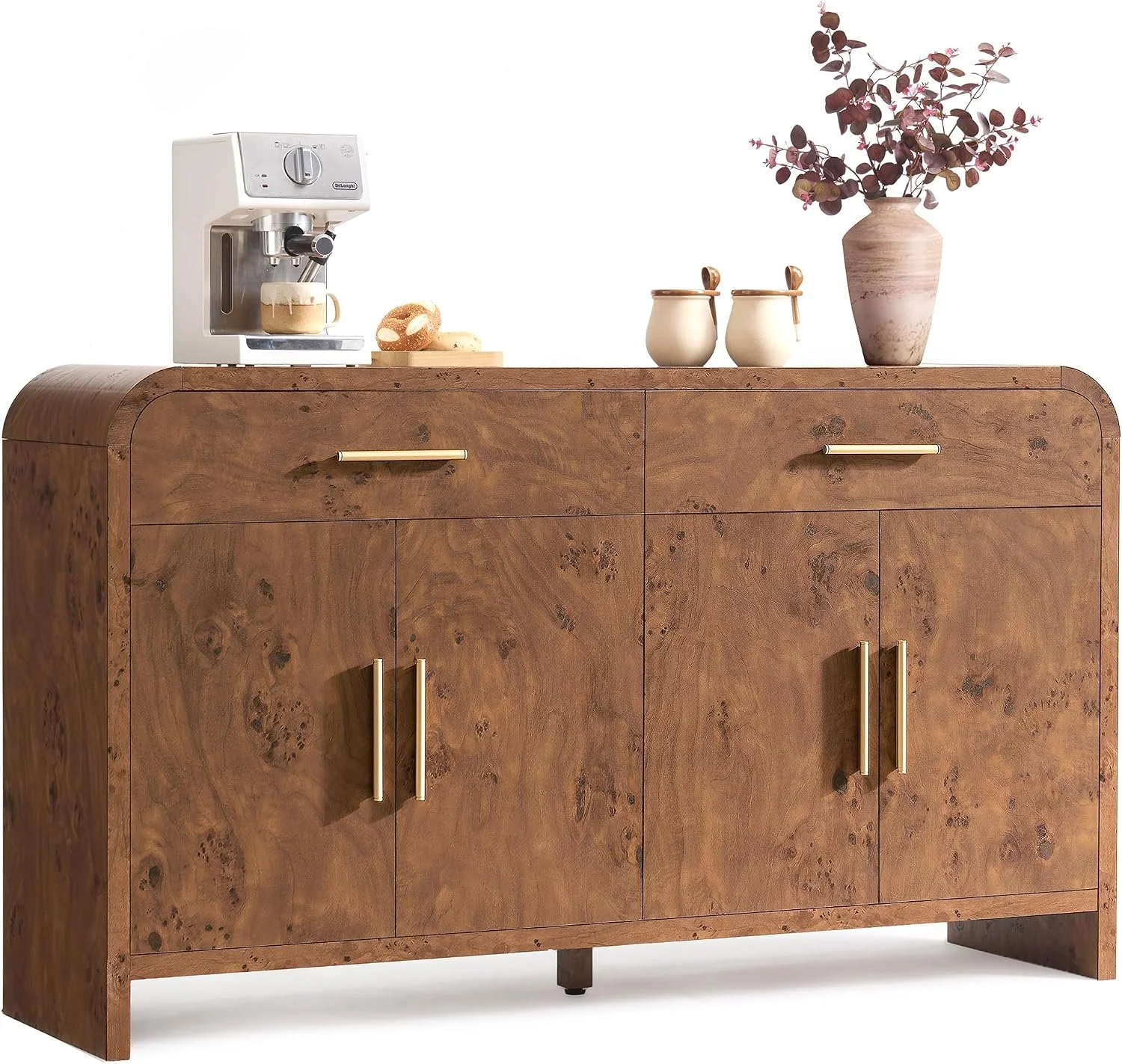
A generous-sized cabinet with a curved front that softens the silhouette and makes it feel less like storage furniture and more like a design choice. The adjustable shelving inside handles everything from board games to dress-up bins. The size means it can anchor a living room wall and hold a genuinely impressive amount of toy inventory behind closed doors.
Best for: Larger living rooms or open-plan spaces where you need significant storage capacity that still reads as furniture
Tip: Use shallow bins inside to keep toys organized by type - makes the inevitable cleanup faster
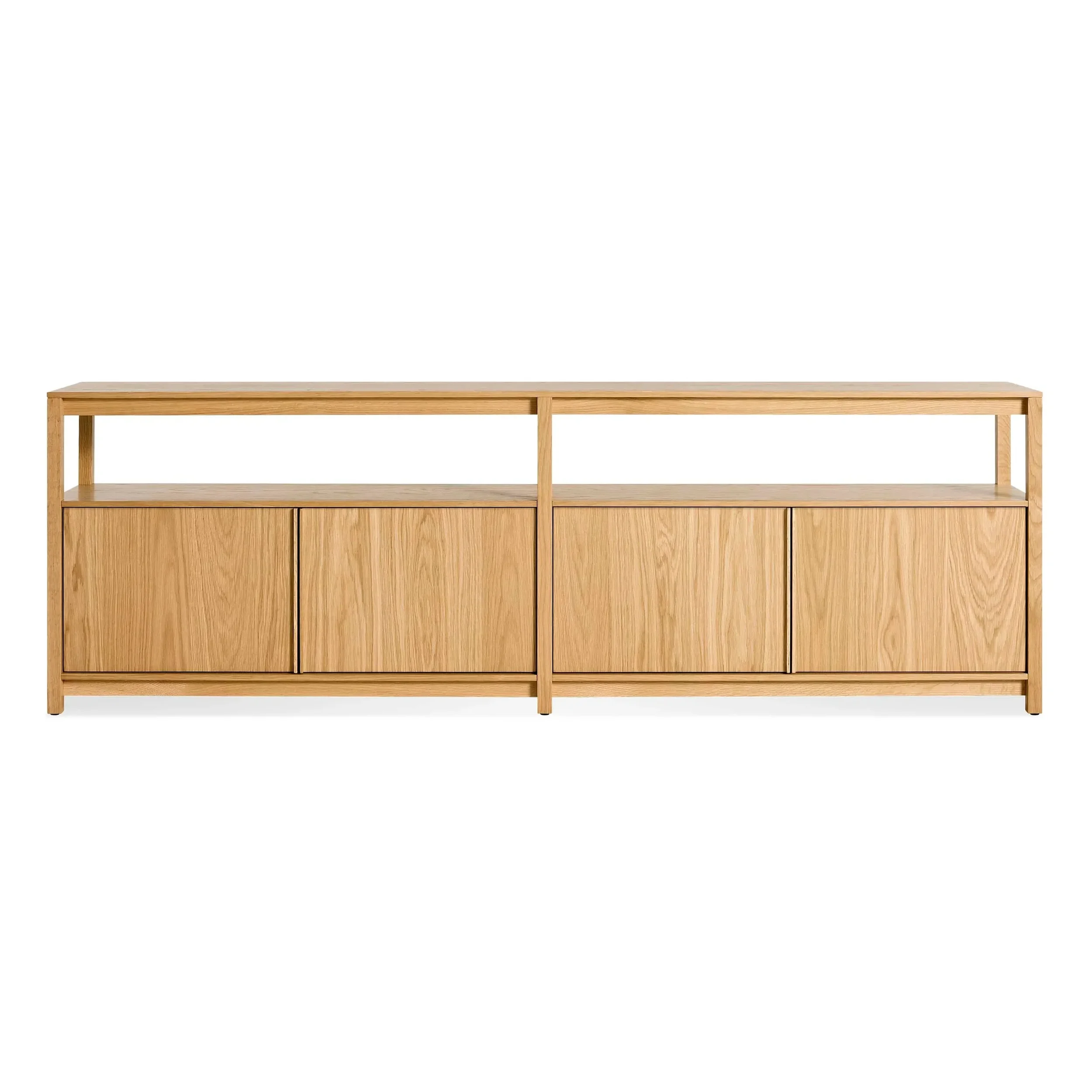
Blu Dot is a design-led American furniture brand known for thoughtful construction and material transparency. The Open Plan bookcase has an open-shelf format that encourages a more curated display — great for the toys and books you don't mind being seen, while keeping the less photogenic items in baskets or boxes. Blu Dot uses steel and powder-coated finishes in their metal pieces, with FSC-certified wood components across their line.
Sustainability standout: Blu Dot uses FSC-certified wood and publishes material information. Made in the USA.
Best for: Parents who want a curated, open-shelf look with room for beautiful storage baskets alongside books and select toys
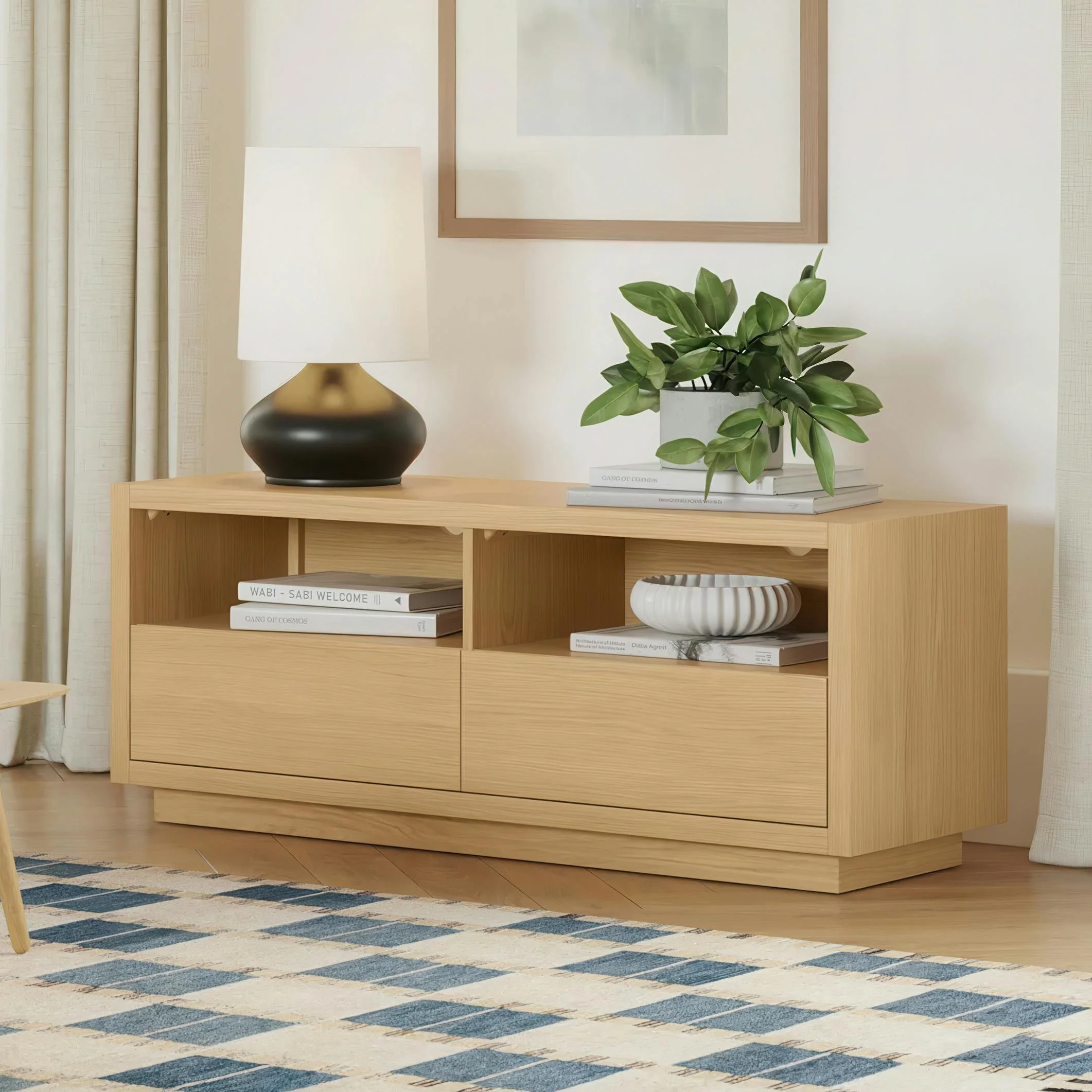
Article is a direct-to-consumer furniture brand known for clean Scandinavian-inspired design and solid material quality. The Leif in white oak has a light, airy quality that prevents it from feeling heavy in a living room while still offering substantial closed storage. White oak is a hardwood known for durability and grain character that improves with age. Article is transparent about materials on their product pages and has made commitments around sustainability in their operations.
Sustainability standout: Mix of veneered + solid wood. Check listing for more details.
Best for: Minimalist or Scandinavian-inspired living rooms where you want the furniture to be part of the design story
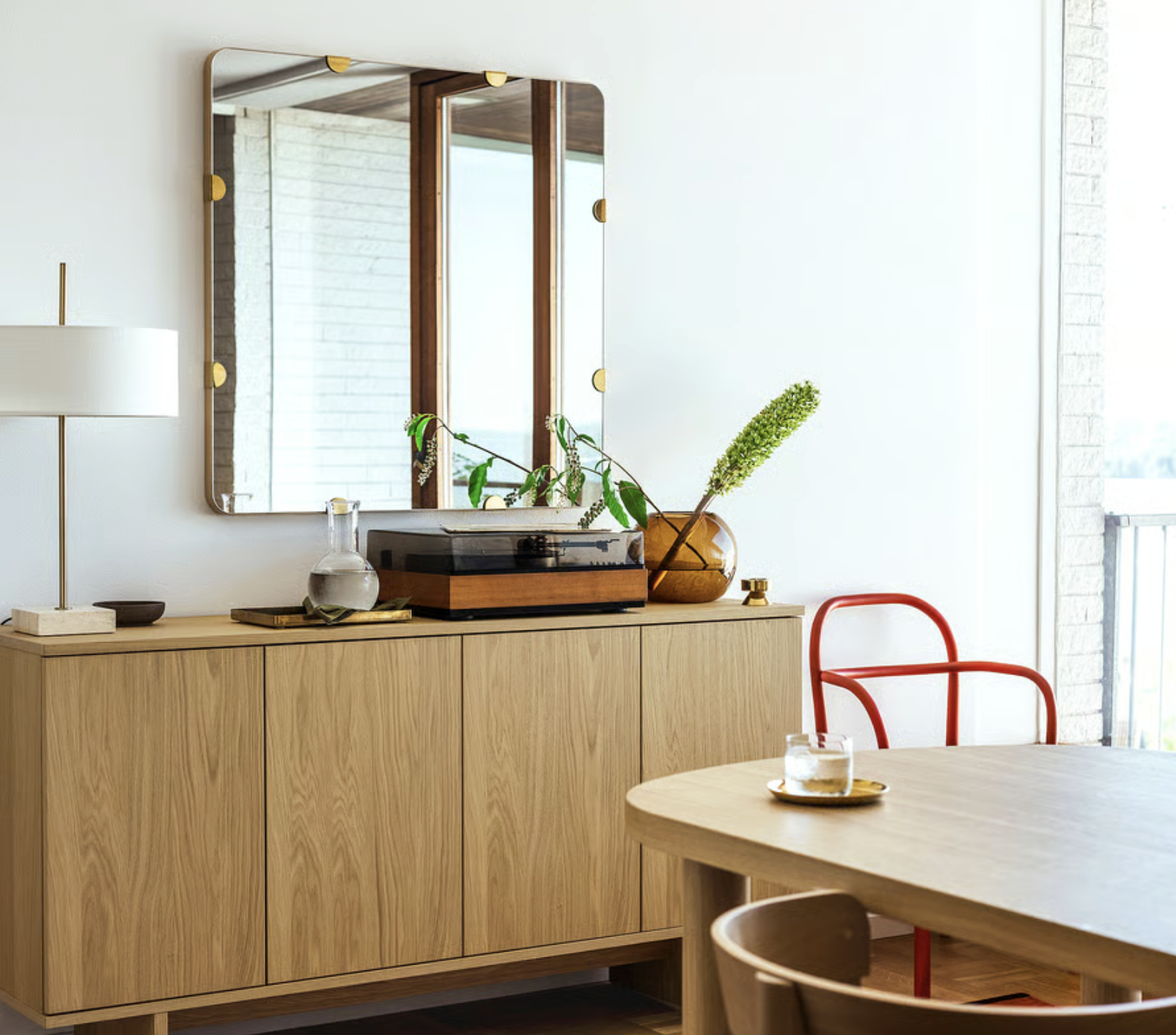
IKEA's STOCKHOLM range is their top-tier collection, and it shows. Oak veneer over a solid wood frame gives it a natural warmth that reads as more premium than standard IKEA. IKEA has made significant sustainability commitments including increasing use of FSC-certified wood across their range and working toward using only renewable and recycled materials. The STOCKHOLM 2025 sideboard is a serious piece of furniture at a price that's hard to match elsewhere.
Sustainability standout: IKEA is committed to FSC-certified wood across their range. Check the STOCKHOLM 2025 listing for specific material certification details.
Best for: Families who want a high-design look without the high-design price, with the confidence of a brand that's publicly accountable on sustainability
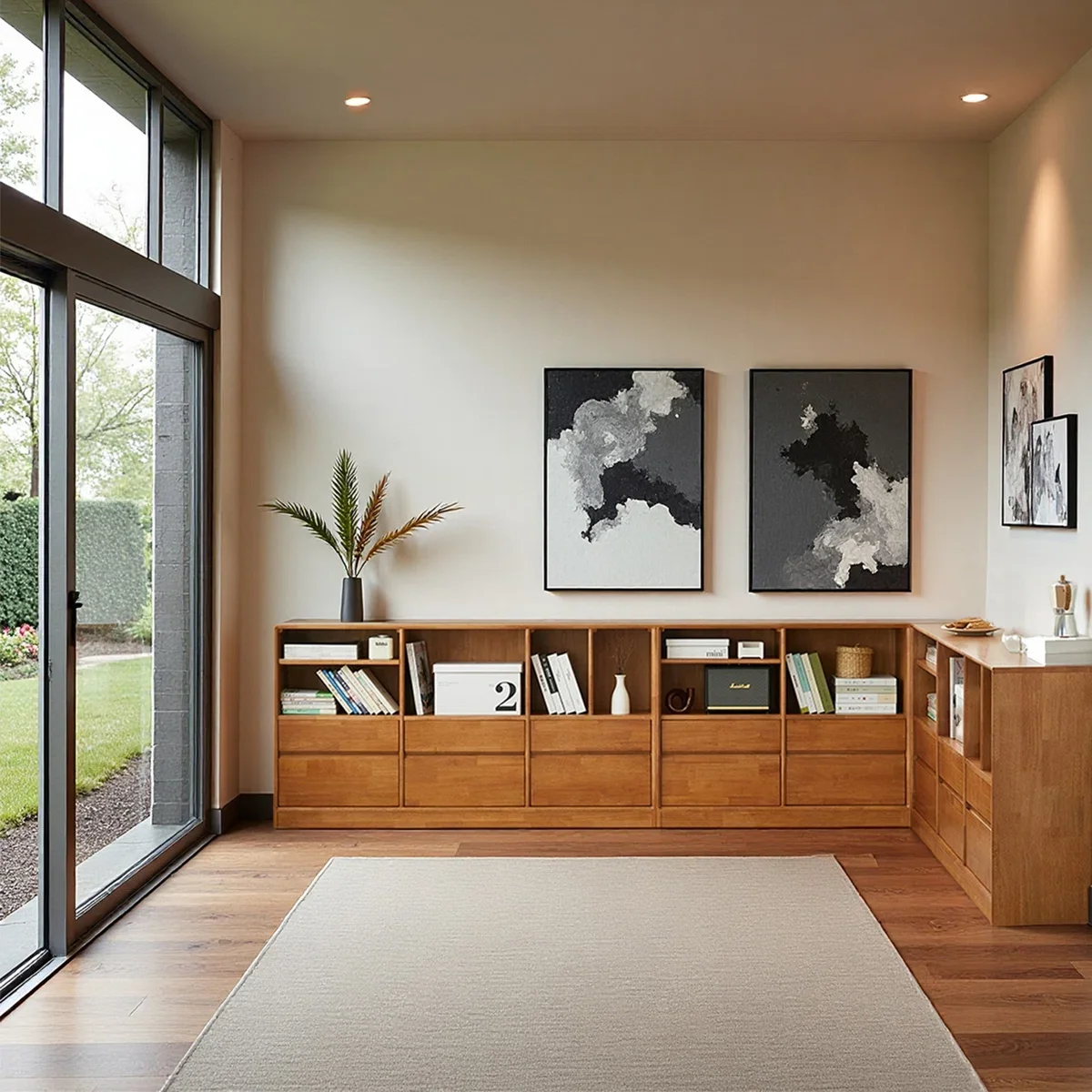
A traditional-leaning sideboard with a classic profile that works well in more traditional or transitional home aesthetics. Solid construction, useful internal storage configuration, and a profile that would look equally at home in a dining room or living room - meaning it grows with you rather than being toy-storage-specific.
Best for: Traditional or transitional spaces where cleaner-lined contemporary pieces feel out of place
Sustainability: Solid wood construction
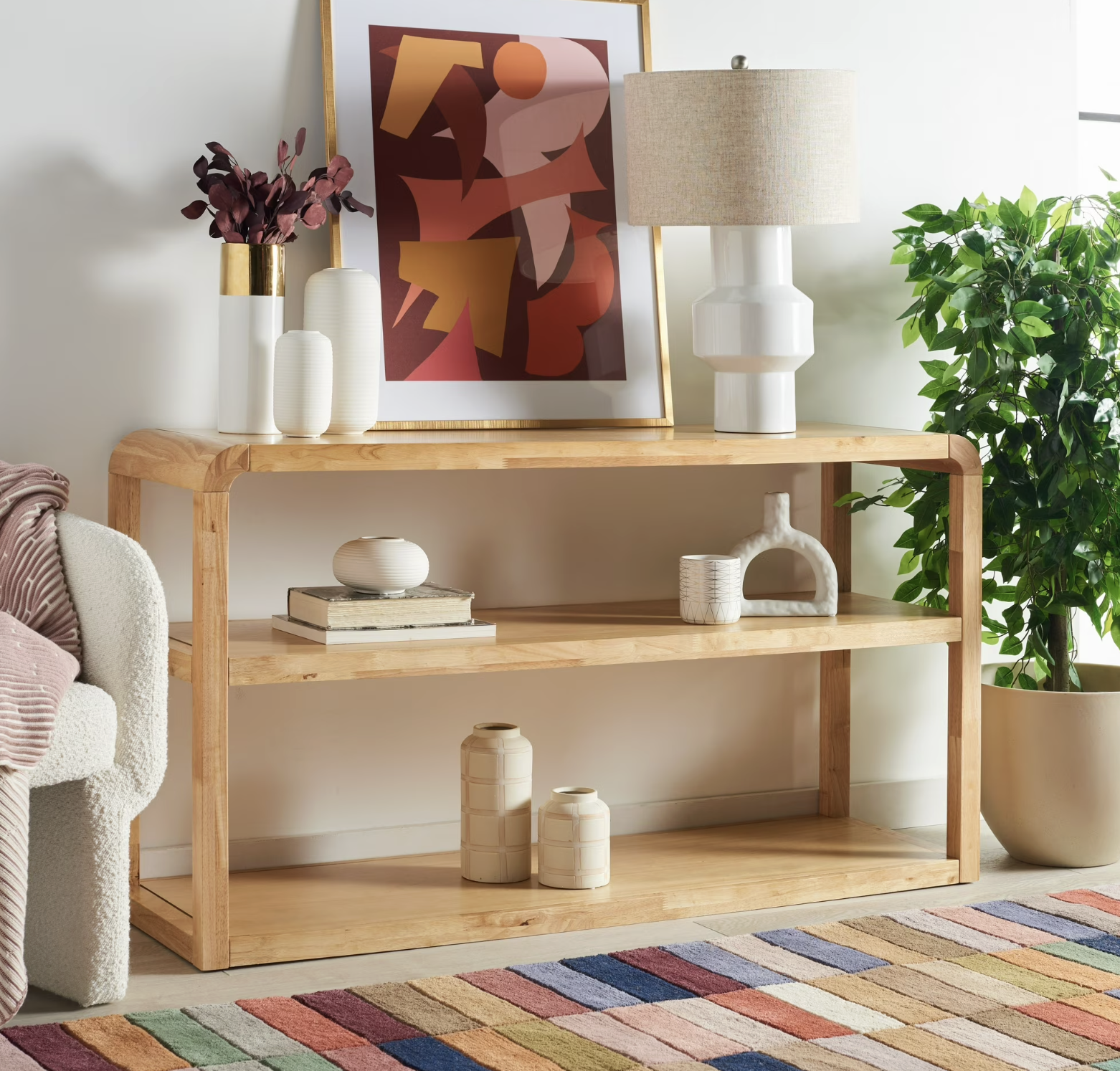
A 3-tier open console table takes a different approach to toy storage. Pair with woven baskets for an organized, open look. The natural finish and open shelving works well as an entryway table where everyday items land, or in a playroom where accessibility for kids is the priority over concealment. Note that these materials do not meet WBC safety standards, but at this price point and minimal materials, it's a practical choice.
Best for: Entryways, playrooms, or secondary spaces where accessibility matters more than concealment
WBC Flag: No certifications. Rubberwood/ Mdf/ Veneer + Nc Coating
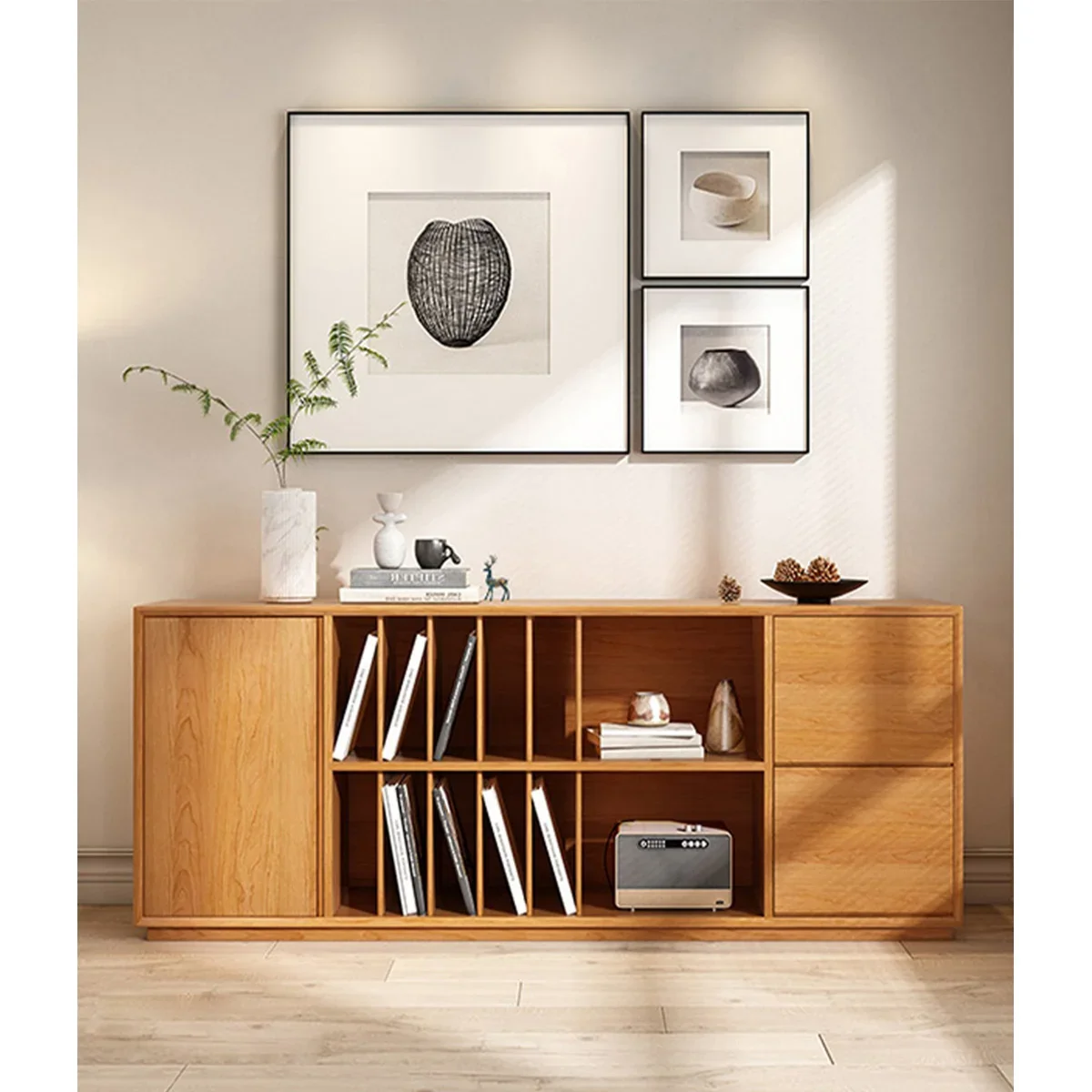
Solid pine is naturally formaldehyde-free and one of the cleanest material choices available in accessible furniture. Pine is a softwood, which means it's lighter in weight and more susceptible to dents than oak or walnut, but it's also renewable, widely available from responsibly managed forests, and has a warmth and character that improves over time. The Scandinavian design keeps it timeless. Plus, you can stack multiples side by side for a full wall coverage.
Sustainability standout: Solid pine construction - naturally formaldehyde-free, no engineered wood, no chemical binders
Best for: Modular, build upon option. Families prioritizing the cleanest possible material at a practical price point.
HOW TO STYLE IT
Making It Work in Your Living Room
A few things we've learned from actually living with toy storage in a family room:
Use the door rule: If it has doors, close them. The visual calm of a closed cabinet does more for a room than any styling trick.
Decant into baskets or bins: Even in open shelving, uniform baskets hide the visual chaos of mixed toys and make the shelf read as styled rather than cluttered.
Give everything a home: Storage only works if the whole family knows where things go. Label bins for younger kids so they can participate in tidying.
Edit seasonally: Rotating toys in and out of storage keeps the selection fresh for kids and manageable for parents. Store half, display half, swap every few months.
Invest in one good piece: One well-made, sustainable sideboard that you actually love will serve you better than three cheaper pieces that never quite work.
FAQ
Frequently Asked Questions: Sustainable Toy Storage
What is the safest material for children's furniture?
Solid wood is the safest material for children's furniture because it is naturally formaldehyde-free. Engineered woods like MDF and particleboard use formaldehyde-based resins as binders, which off-gas into indoor air over time. According to the International Agency for Research on Cancer (IARC), formaldehyde is a known human carcinogen. When solid wood isn't possible, look for GREENGUARD Gold certification, which verifies that a finished piece's chemical emissions stay within strict limits including for formaldehyde. At Whole Bunch Club, we prioritize solid wood and FSC-certified materials in our furniture recommendations.
What does FSC-certified furniture mean?
FSC (Forest Stewardship Council) certification means the wood used in a piece of furniture was sourced from forests that are responsibly managed according to environmental, social, and economic standards. FSC-certified forests must protect biodiversity, maintain ecosystems, and respect the rights of workers and local communities. While FSC certification doesn't directly address toxicity, it is a meaningful sustainability signal — and brands that prioritize FSC certification tend to take material quality seriously across their supply chain.
What is GREENGUARD Gold certification for furniture?
GREENGUARD Gold certification (originally called GREENGUARD Children & Schools) is a third-party certification that verifies a furniture product's chemical emissions stay within strict limits for indoor air quality. It screens for over 360 VOCs (volatile organic compounds) and sets particularly strict limits on formaldehyde. It is the most meaningful certification for furniture in spaces where children spend time, because it tests the finished product, not just individual components or the finish alone. Whole Bunch Club recommends prioritizing GREENGUARD Gold when choosing furniture for kids' rooms and family living spaces.
How do I hide kids' toys in a living room without it looking like a playroom?
The most effective approach is choosing closed storage furniture that reads as intentional adult pieces. Think sideboards, media units, and storage benches in solid wood or metal that look like design choices rather than toy storage. Keep the doors closed, use uniform baskets inside for organization, and rotate toys in and out seasonally to keep the selection manageable. At Whole Bunch Club, we curated this roundup specifically for that purpose: sustainable furniture pieces that hold a surprising amount of toy clutter while looking completely at home in a grown-up living space.
Is metal furniture safe for families with kids?
Metal furniture is generally a safe choice for family homes. Unlike engineered wood, metal does not off-gas formaldehyde or VOCs. Look for pieces with powder-coated finishes (more durable and lower-VOC than spray paint) and check that any paint or finish used is lead-free. Metal furniture is also exceptionally durable and is fully recyclable at end of life, making it one of the more sustainable long-term choices. For families with young toddlers, consider rounded corners and stable, tip-resistant designs.
This page may contain affiliate links. This means that if you click on a link and make a purchase, I may earn a small commission at no additional cost to you. I only recommend products or services that I personally use or believe will add value to my readers.
