
Non-Toxic Laundry Solutions for Your Family
Non-Toxic Laundry Solutions for Your Family: The clean laundry swaps we use at Whole Bunch Club
Laundry can easily be overlooked in the non-toxic home conversation. We spend time researching what goes on our skin and in our food, but the detergent that washes everything our family wears, sleeps in, and wraps around a newborn? Often an afterthought. Here's our guide to non-toxic laundry products for families - what to avoid in conventional detergents, and the clean swaps we actually use at Whole Bunch Club.
What's Actually in Conventional Laundry Detergent?
Most conventional laundry detergents are not required to disclose their full ingredient list. Plus, even if they do disclose, most of us wouldn’t even be able to read them - much less understand what they are! Here are the ingredients worth knowing about.
1,4-Dioxane
According to the U.S. Environmental Protection Agency, 1,4-dioxane is classified as a probable human carcinogen - meaning it is likely to cause cancer with sufficient exposure. The particularly tricky part: 1,4-dioxane is never listed on labels because it is not intentionally added to the formula. It forms as a byproduct during manufacturing of ethoxylated surfactants (look for ingredients ending in "-eth" or "-PEG") - and some laundry detergents have been found to have the highest levels of 1,4-dioxane of any consumer products tested. The EPA has found it in water supplies across the U.S., and it is difficult to filter out once it enters waterways.
Worth Knowing: In 2022, New York banned laundry detergents containing 1,4-dioxane, citing risks to public health and the environment.
Optical Brighteners
Optical brighteners are synthetic chemicals added to detergents to make clothes appear whiter and brighter by reflecting UV light. They do not actually clean fabric - they coat it with a chemical layer that stays on clothing fibers after washing. Optical brighteners are designed not to wash out — they are intentionally deposited on fabric surfaces, where they can irritate sensitive skin. They are also not biodegradable, meaning they accumulate in the environment after going down the drain. The European Chemicals Agency (ECHA) has classified certain optical brighteners as substances of very high concern under REACH for their environmental persistence.
Synthetic Fragrance
"Fragrance" or "parfum" on a label is a catch-all term that can represent hundreds of undisclosed chemical compounds - including phthalates, which are linked to hormone disruption and are classified as endocrine-disrupting chemicals (EDCs). Phthalates are also associated with increased risks of asthma and allergies in children. Because fragrance formulas are considered proprietary, brands are not required to disclose what's in them.

For more on the role of fragrances on your health, check out our interview with the founder of Million Marker, the only at-home test for microplastics.
Sulfates
Sodium lauryl sulfate (SLS) and sodium laureth sulfate (SLES) are foaming agents that can strip natural oils from skin, worsen eczema, and irritate the lungs. SLES is frequently contaminated with 1,4-dioxane as a manufacturing byproduct. SLS is so reliably irritating to skin that researchers use it as the standard irritant control in patch testing.
WBC bottom line: Laundry detergent residue stays on clothing long after washing. For kids and babies who spend hours in direct contact with fabric - and who put everything in their mouths - the ingredient list matters.
THE GOOD NEWS:
The Non-Toxic Laundry Products We Love
Everything in our laundry room has been chosen using the same criteria we apply to all WBC research: what's in it, who certifies it, and whether it actually works. Here's the full lineup.
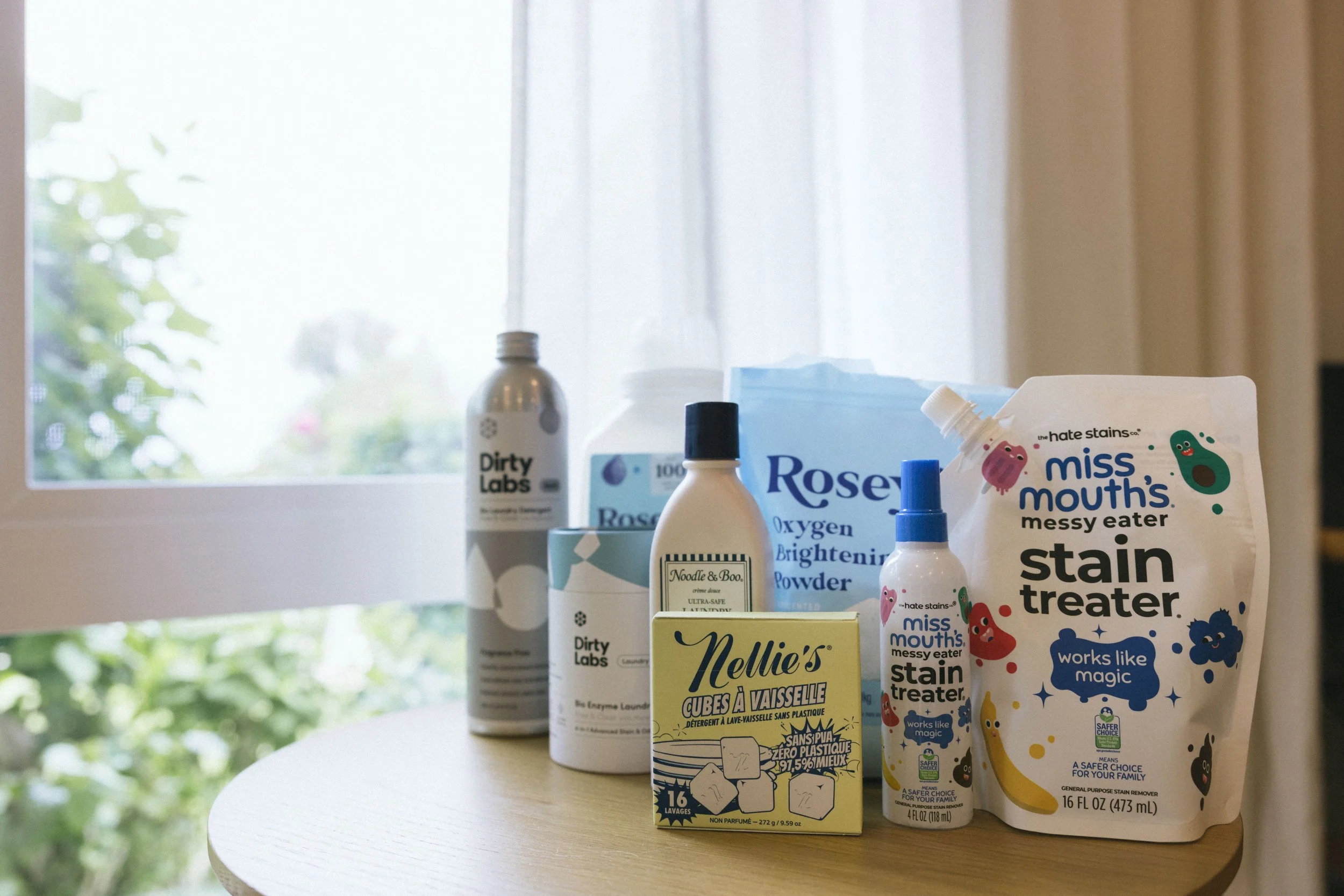
Dirty Labs Bio Enzyme Laundry Detergent (Fragrance Free)
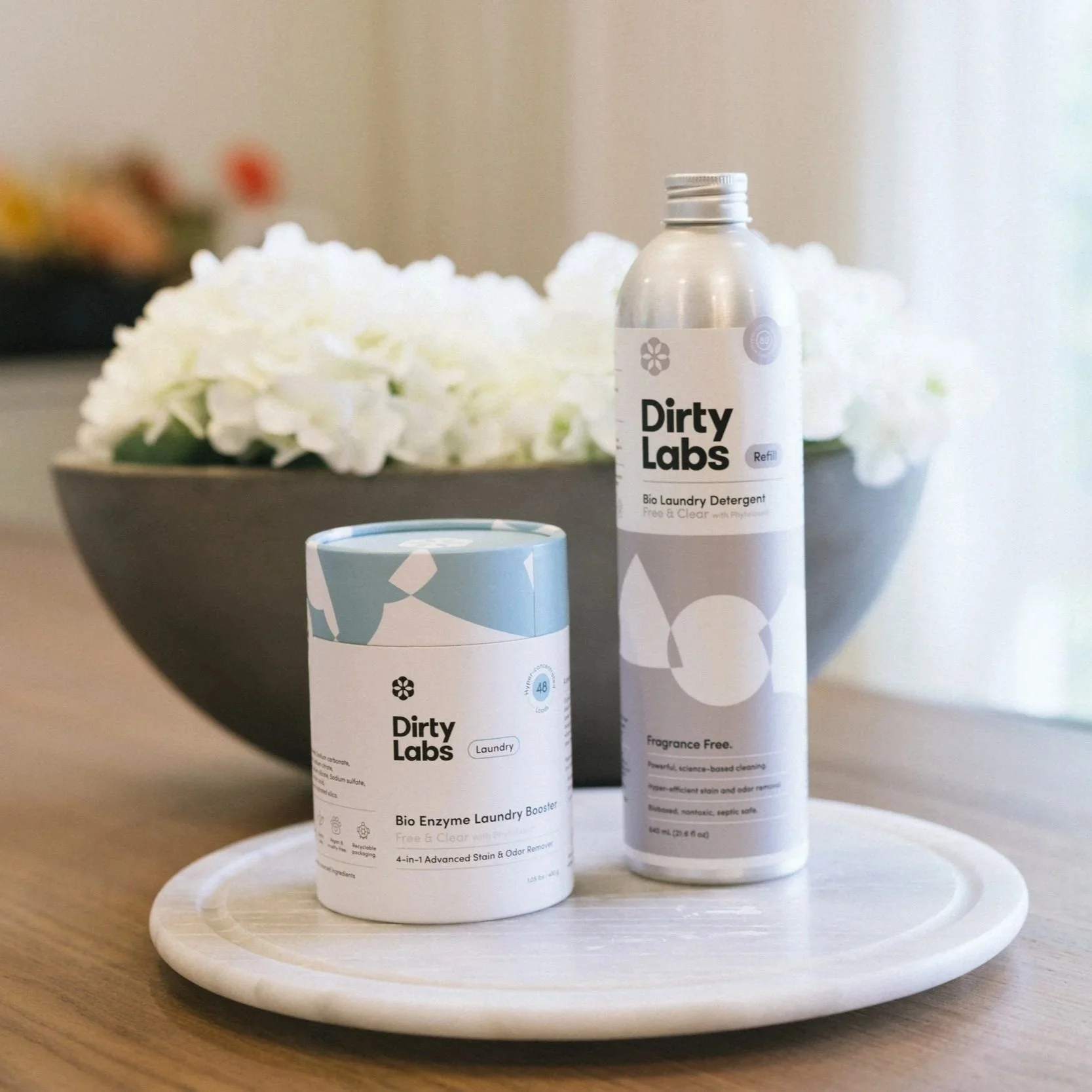
Dirty Labs is our everyday detergent and the one we reach for first. It is a bio enzyme laundry detergent featuring their proprietary Phytolase® technology - a 5-in-1 enzyme blend that targets and breaks down stains and odors at the molecular level rather than masking them. The formula is hyper-concentrated: less than 2 teaspoons cleans a standard load, which means less packaging waste and a better cost per load than it initially appears.
Certifications: EPA Safer Choice certified, USDA Biobased certified, EWG Verified (Free & Clear line), National Eczema Association (NEA) recognized, PETA vegan and cruelty-free. EPA Safer Choice Partner of the Year.
Free from: Known toxins, allergens, hormone disruptors, EU fragrance allergens, and California Prop 65 chemicals of concern
Third-party tested: For both human and environmental safety
Packaging: Recyclable aluminum and cardboard - no plastic
Best for: Everyday family laundry, activewear, baby clothes, sensitive skin
WBC Pick: The Free & Clear fragrance-free version is what we use for everything going on babies and toddlers. The certifications here are some of the strongest in the category.
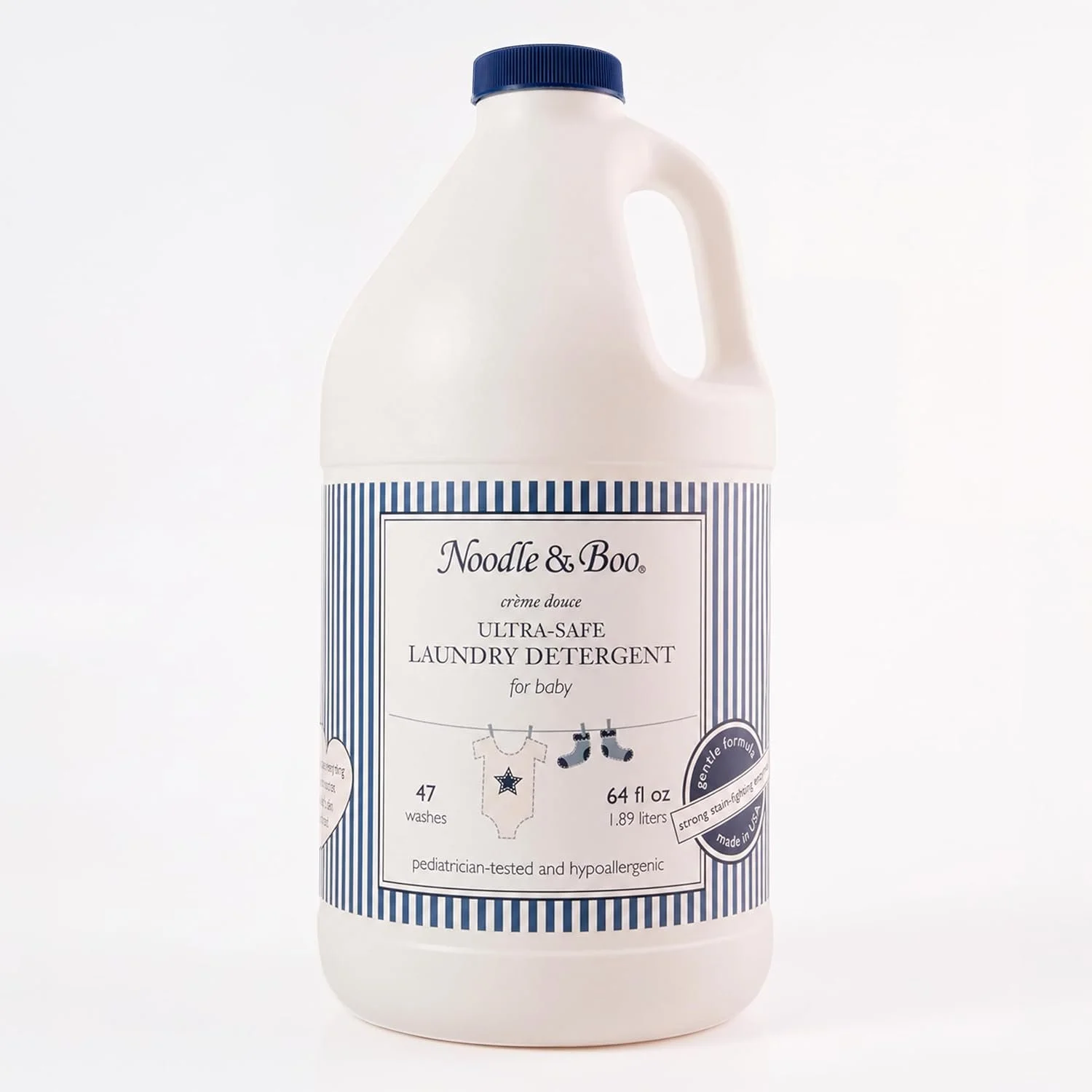
Noodle & Boo Ultra-Safe is a plant-based baby laundry detergent formulated specifically for newborns and infants with delicate skin. It uses a plant-based cleaning system (lauryl glucoside, decyl glucoside, sodium oleate) with enzyme soil removers (protease, amylase) and no synthetic additives. The fragrance-free version is EWG Verified. Gentle enough for newborn loads while effective enough for the whole family's laundry.
Certifications: EWG Verified (fragrance-free version), pediatrician and dermatologist tested, hypoallergenic, cruelty-free, made in USA
Free from: Sulfates, dyes, formaldehyde, phosphates, phthalates, optical brighteners, 1,4-dioxane, parabens, chlorine bleach
Ingredients: Water, plant-based cleaners (lauryl glucoside, decyl glucoside, sodium oleate), glycerin, sodium carbonate, sodium gluconate, carboxymethyl cellulose, enzyme soil removers (protease, amylase)
Best for: Newborn and infant laundry, highly sensitive skin, first baby detergent
Note: The scented version contains fragrance allergens (listed on the label). For the cleanest option, choose the fragrance-free version which carries the EWG Verified mark.
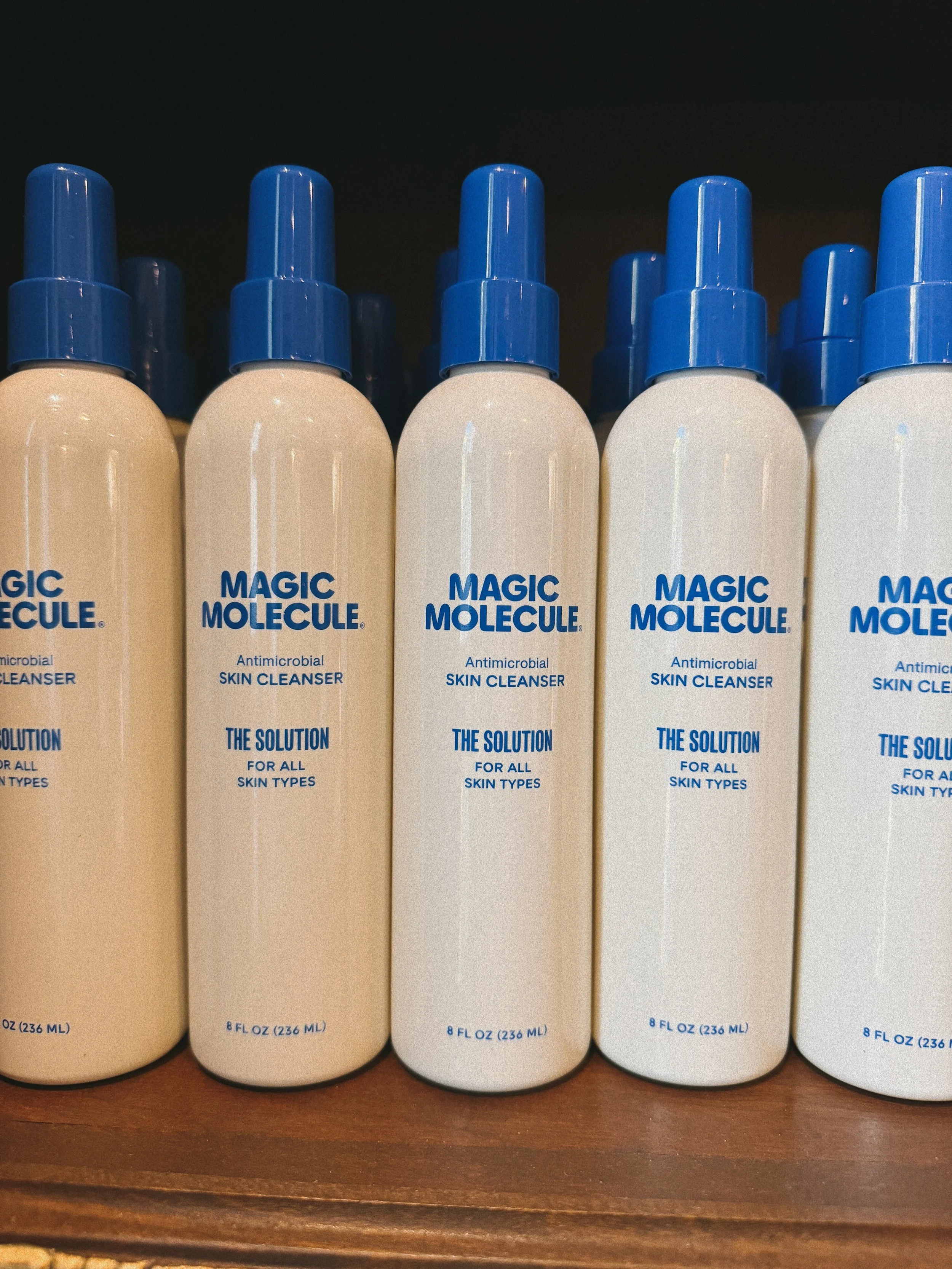
Rosey Oxygen Brightening Powder
For those with a Thrive Membership, Rosey Oxygen Brightening Powder is a clean option at a great, low price. It’s a chlorine-free, oxygen-based bleach alternative and laundry booster. It whitens, brightens, and deodorizes using sodium percarbonate - the same active ingredient in most non-toxic bleach alternatives. When sodium percarbonate dissolves in water, it releases hydrogen peroxide, which does the cleaning work through gentle oxidation. Safe for colors, safe for whites, no chlorine gas, no optical brighteners. EWG rates Rosey's line as Low Hazard.
Active ingredient: Sodium percarbonate (releases hydrogen peroxide in water) - the gold standard non-toxic bleach alternative
EWG rating: Low Hazard
Free from: Chlorine bleach, optical brighteners, synthetic fragrance, phosphates
Best for: Whitening whites, brightening colors, soaking heavily soiled items, boosting any load
How we use it: Added to the drum (not the detergent drawer) for loads that need extra brightening or stain power - kids' clothes, whites, anything that comes home from the park.
*WBC Note* Thrive Market is a worthwhile membership to consider. For a small annual fee you get discounts on a wide range of health food products.
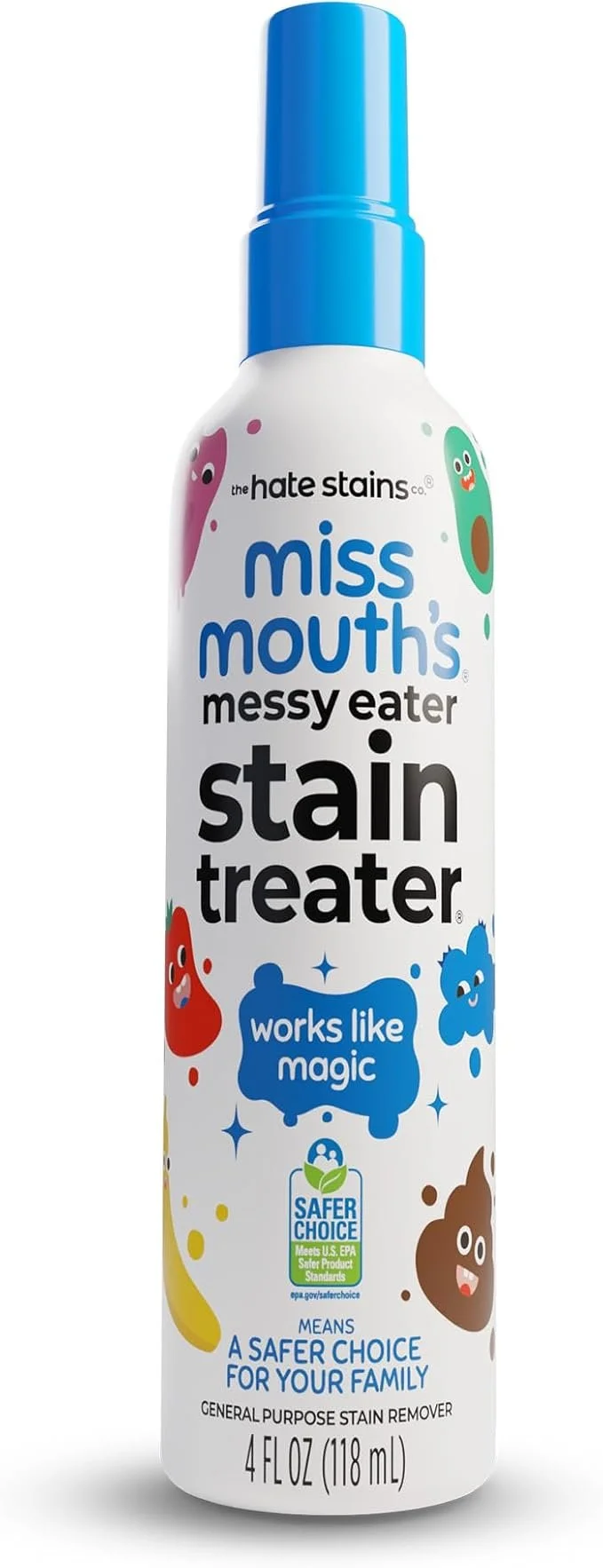
Miss Mouth's Messy Eater Stain Treater is an EPA Safer Choice certified stain remover spray designed for baby and family use. It is effective on both fresh and set-in stains - fruit juice, baby food, formula, ketchup, blowouts, grease, and blood. The formula is fragrance-free, 100% biodegradable, and pH neutral. EWG lists its ingredients (ethoxylated alcohol C12-C15, glycerin, sodium sulphite, ethanol, citric acid) as low concern. It comes in both a 4oz spray bottle (for the diaper bag) and a 16oz refill pouch.
Certifications: EPA Safer Choice certified - meets EPA criteria for human and environmental safety
Free from: Chlorine, bleach, phosphates, parabens, peroxide, sulfates, synthetic fragrance, SLS
Biodegradable: 100% biodegradable, pH neutral formula
Best for: Baby clothes, toddler laundry, on-the-go stain treatment, set-in stains
How to use: Remove excess, dampen dry stains, spray, rub if needed, then wash. Repeat for stubborn stains.
*WBC Note* Million Marker rates this as 'SLOW' (moderate concern) due to the ethoxylated alcohol ingredient - a surfactant type that can be associated with 1,4-dioxane as a manufacturing byproduct. That said, it carries EPA Safer Choice certification, which requires ingredient-level review. We still use it and consider it one of the better options in the stain treater category, but it's worth knowing.
GENERAL NOTES
What to Look for in Non-Toxic Laundry Products
If you're evaluating laundry products beyond the ones here, these are the things we look for in WBC research:
EPA Safer Choice certification: A voluntary but meaningful certification that requires ingredient-level review for human and environmental safety. One of the strongest signals in this category.
EWG Verified mark: Requires full ingredient disclosure and meets EWG's strictest health and safety standards, including no ingredients on EWG's Unacceptable List.
Full ingredient disclosure: Brands that publish their full ingredient list with CAS numbers (as Dirty Labs does) signal a higher level of transparency.
PVA-free pods and tabs: The dissolvable plastic wrapper in most conventional pods is an emerging concern. Powder-based or unwrapped options avoid this entirely.
Free from optical brighteners: These stay in fabric after washing and are linked to skin irritation and ecological harm.
No synthetic fragrance: "Fragrance" can legally contain hundreds of undisclosed compounds including phthalates. Fragrance-free or naturally scented with disclosed ingredients is the cleaner option.
FAQ
Frequently Asked Questions: Non-Toxic Laundry
What is a non-toxic laundry detergent?
A non-toxic laundry detergent is one formulated without chemicals associated with harm to human health or the environment, such as 1,4-dioxane, optical brighteners, synthetic fragrance containing phthalates, phosphates, SLS/SLES, and chlorine bleach. Because 'non-toxic' is an unregulated term with no formal definition, the most reliable indicators are third-party certifications: EPA Safer Choice, EWG Verified, and MADE SAFE Certified are the most meaningful in the laundry category. At Whole Bunch Club, we prioritize products that carry at least one of these certifications and publish a full ingredient list.
Is Dirty Labs detergent safe for babies and sensitive skin?
Yes. Dirty Labs Free & Clear Bio Enzyme Laundry Detergent is EWG Verified, EPA Safer Choice certified, and recognized by the National Eczema Association (NEA) - making it one of the most rigorously certified options available for sensitive skin. It is free from all EU fragrance allergens and California Prop 65 chemicals. Whole Bunch Club uses the Free & Clear version for baby and toddler laundry specifically because of this certification stack.
What is 1,4-dioxane and why is it in laundry detergent?
1,4-dioxane is classified by the U.S. Environmental Protection Agency as a probable human carcinogen and neurotoxin. It is not intentionally added to laundry detergents - it forms as a byproduct during the manufacturing of ethoxylated surfactants, which are common in conventional detergent formulas. Because it is a byproduct rather than an ingredient, brands are not required to list it on labels. In 2022, New York banned laundry detergents containing 1,4-dioxane. To avoid it, look for EPA Safer Choice or EWG Verified certifications, both of which require ingredient-level review.
What is the safest laundry detergent for newborns?
At Whole Bunch Club, we recommend Noodle & Boo Ultra-Safe Laundry Detergent (fragrance-free version, which is EWG Verified) or Dirty Labs Free & Clear (EWG Verified, EPA Safer Choice, NEA recognized) for newborn laundry. Both are free from sulfates, phosphates, optical brighteners, formaldehyde, phthalates, and synthetic fragrance. Noodle & Boo is specifically formulated for infant skin and is pediatrician and dermatologist tested. Always choose the fragrance-free version of any detergent for the youngest children.
Are conventional dishwasher pods bad for you?
Most conventional dishwasher pods are wrapped in PVA (polyvinyl alcohol), a dissolvable plastic. While PVA does dissolve in water, research is emerging on whether it fully biodegrades or contributes to microplastic pollution in waterways. Additionally, many conventional pods contain synthetic fragrance, optical brighteners, and surfactants that can leave residue on dishes that come into contact with food. Nellie's Dish Cubes are a PVA-free, plastic-free alternative with an A-rated ingredient list from EWG and Leaping Bunny cruelty-free certification.
What is a safe bleach alternative for kids' clothes?
Oxygen-based bleach alternatives using sodium percarbonate are the safest and most effective non-toxic bleach alternative. When dissolved in water, sodium percarbonate releases hydrogen peroxide, which whitens and brightens through gentle oxidation rather than harsh chlorine chemistry. It is color-safe, septic-safe, and biodegradable. Rosey Oxygen Brightening Powder is rated Low Hazard by EWG and works well as a laundry booster added directly to the drum. Nellie's also makes an oxygen brightener with a similarly clean ingredient list.
How do I boost my toddler's immune system naturally before school starts?
The most effective natural immune support for toddlers starting school focuses on foundations first: consistent sleep of 11-14 hours per night, a varied diet with plenty of fruits, vegetables, and zinc-rich foods, daily outdoor play, and thorough handwashing. From a supplement standpoint, Whole Bunch Club recommends starting a quality multivitamin with vitamin D and zinc, a children's probiotic, and vitamin D3 drops at least a few weeks before school begins so levels are established before high-exposure season starts.
Is Miss Mouth's Messy Eater Stain Treater safe for baby clothes?
Miss Mouth's Messy Eater Stain Treater is EPA Safer Choice certified, fragrance-free, 100% biodegradable, and pH neutral. It is free from chlorine, bleach, phosphates, parabens, and SLS, and is marketed specifically for baby and infant laundry. EWG lists its five ingredients as low concern. Whole Bunch Club notes that one ingredient (ethoxylated alcohol C12-C15) is a surfactant type associated with potential 1,4-dioxane contamination as a manufacturing byproduct - however, the EPA Safer Choice certification requires review of this risk. We consider it one of the better stain treater options available and use it at WBC.
What certifications should I look for in laundry products?
The most meaningful third-party certifications for laundry products are EPA Safer Choice (requires ingredient-level safety review for human and environmental health), EWG Verified (requires full ingredient disclosure and meets EWG's strictest health standards), and MADE SAFE Certified (requires human and environmental health screening of all ingredients). Leaping Bunny confirms no animal testing. USDA Biobased confirms ingredients are derived from renewable biological sources. 'Non-toxic' and 'natural' are unregulated terms with no verified meaning - always look for a named third-party certification rather than marketing language.
This page may contain affiliate links. This means that if you click on a link and make a purchase, I may earn a small commission at no additional cost to you. I only recommend products or services that I personally use or believe will add value to my readers.

Back to school shopping for a toddler is a whole thing - and the Storq collection by Kindred Bravely might be the most practical coordinated daycare kit we've found. We break down every piece: the toddler-sized backpack (with name embroidery), the insulated lunch box designed to fit inside it, the stainless steel water bottle, the machine-washable nap mat, the wet/dry bag no daycare parent should be without, and the coordinating French terry apparel that actually holds up to a full school day. Plus age-based starter set recommendations and an honest note on materials. All pieces linked.